LIGHT INTERIORS
Recent years have not been marked by progressive change; rather, they have been characterised by regressive politics and a continuing reluctance to protect and uphold the reproductive rights of women and girls.
Despite decades of progress, hard-won freedoms remain vulnerable to political and ideological challenge. Against this backdrop, the work reflects on the reproductive body as a site memory and transformation.
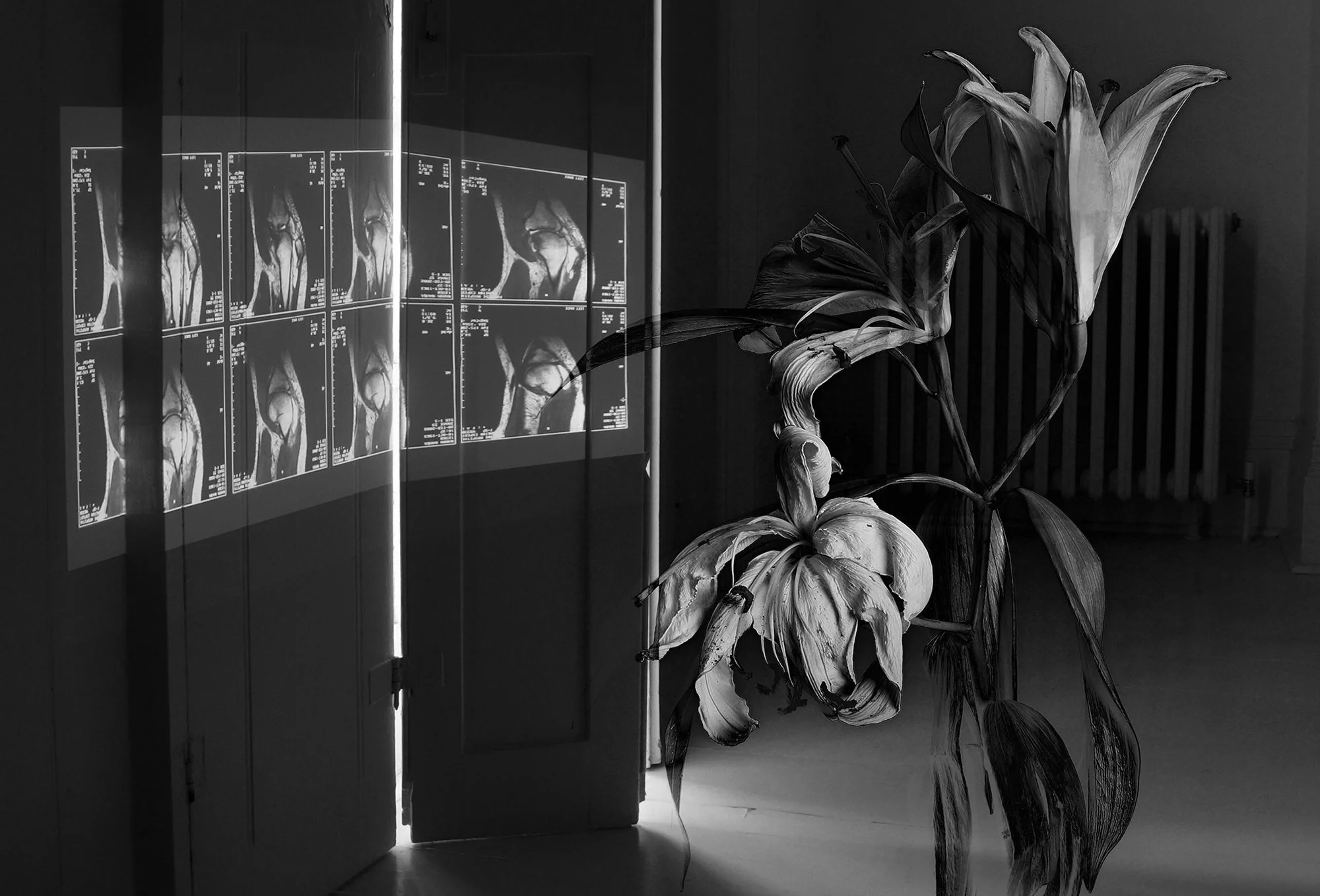
Rooted in my own lived experience, the work reflects on the body as an archive, carrying traces of memory, transformation and vulnerability. By projecting the mammogram within a domestic setting, I reposition a medical image often confined to clinical spaces, allowing it to occupy the intimate environment of the home. In doing so, the boundaries between public and private, medical and personal, become blurred.
Throughout Light Interiors, I draw upon photographs, medical imagery and family archives to explore womanhood, identity and embodied experience. The home functions as a site of memory where personal histories are preserved, revisited and reinterpreted. Within this context, the mammogram becomes more than a diagnostic record. It serves as a testament to lived experience and a reminder of the ways in which women's bodies are shaped by care, health, ageing and social expectations.
The fragmented projections suggest the incomplete and often obscured nature of women's stories, particularly those relating to health and the body. While deeply personal, the work also seeks to engage with wider conversations about visibility, agency and the value placed on women's experiences. By bringing together archival imagery, domestic space and medical records, Light Interiors invites reflection on how memories are held within both the body and the home, and on the enduring relationship between personal experience and broader social and political realities.
‘The decision of whether or not to bear a child is central to a woman’s life, well-being and dignity. When the government makes that decision for her, she is being treated as less than a full adult human responsible for her own choices.’ Ruth Bader Ginsburg